
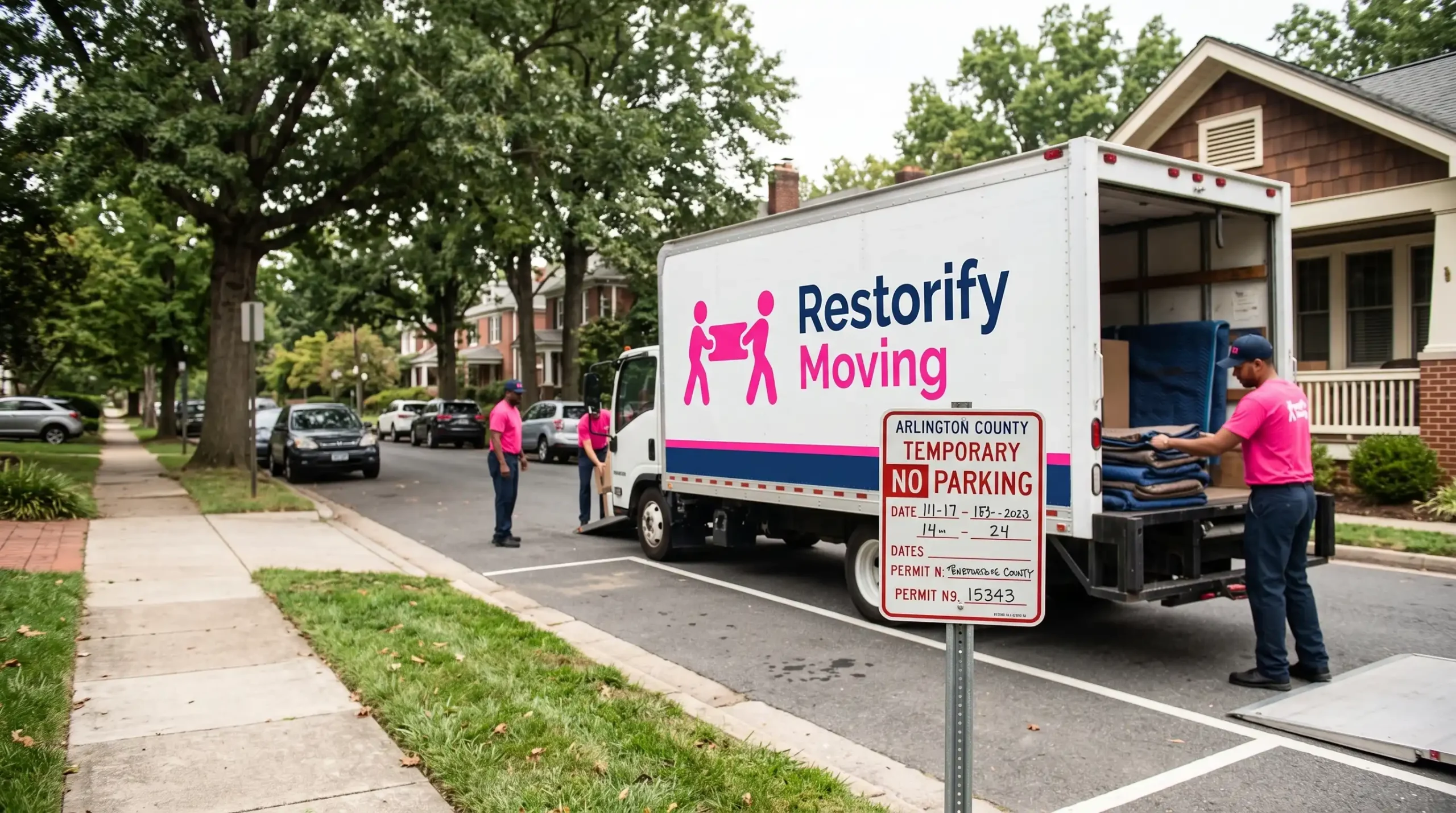
Relocating an entire household with children requires far more than loading cardboard cartons into the back of a truck. Between transferring academic records, securing curb space along narrow residential avenues, and coordinating freight elevator windows in managed condominiums, parents face a dense series of overlapping tasks. When every detail is organized into a clear timeline, moving turns from a source of household exhaustion into a manageable, structured transition.
This guide delivers a week-by-week moving checklist for Arlington families. It brings together practical packing methods, neighborhood logistics, school enrollment steps, and municipal rules into one dependable resource.
Navigating the Unique Realities of Family Relocation in Arlington
Arlington County covers just twenty-six square miles, yet its neighborhoods present starkly different moving environments. Moving out of a historic home in North Arlington requires completely different preparation than moving into a contemporary high-rise apartment near the Metro. Recognizing these distinctions early helps you select appropriate equipment, avoid parking fines, and keep your move running smoothly.
Contrasting Historic Neighborhood Access with Metro Corridor High-Rises
Single-family homes in established neighborhoods such as Lyon Village, Westover, Country Club Hills, and Ashton Heights often feature narrow streets framed by mature trees, stone retaining walls, and tight driveways. Large moving vans cannot always pull directly up to your front door. If branches hang low or the driveway incline is steep, movers must stage the vehicle on the street, requiring extended walking paths between the truck ramp and your entryway.
Condominium buildings and apartments along the Wilson Boulevard and Jefferson Davis Highway corridors present the opposite scenario. Properties in Rosslyn, Courthouse, Ballston, and National Landing require coordinated loading dock access. Most property management offices enforce strict two-to-four-hour windows for service elevator use, mandate floor protection across common hallways, and require formal approval before any moving equipment enters the lobby. Understanding which environment your family is entering allows you to plan your timing and reserve loading zones long before moving day arrives.
Factoring Commute Corridors and Rush-Hour Truck Routing
Northern Virginia traffic heavily influences moving day productivity. Arterial roadways such as Route 50 (Arlington Boulevard), Interstate 66, Interstate 395, and the George Washington Memorial Parkway experience heavy congestion during morning and evening rush hours.
Scheduling truck transit between 10:00 AM and 2:00 PM helps your crew avoid peak traffic periods. A local relocation that takes twenty minutes in midday traffic can easily stretch past an hour during commuter peaks, running up hourly labor charges. If your family is moving across town while managing school drop-offs or sports practices, timing your vehicle movements around regional traffic patterns keeps everyone on schedule.
Eight Weeks Out: Laying the Operational Groundwork
Two months prior to moving day, your primary task is establishing the foundation of your relocation. Early preparation gives your family control over scheduling, costs, and carrier selection.
Eight-Week Milestone Summary
- Conduct a complete walkthrough to log large furniture and outdoor play sets.
- Gather multiple written in-home or virtual moving estimates.
- Verify carrier operating credentials with Virginia DMV or USDOT.
- Establish a moving budget accounting for materials, labor, and building deposits.
Auditing Household Inventory Room by Room
Begin by walking through every room, attic space, basement, and closet to document what your family actually owns. Households with growing children accumulate seasonal clothing, outdoor sports gear, nursery furniture, and school projects at an astonishing rate.
-
Create a master inventory list categorizing large furniture pieces, valuable artwork, musical instruments, and outdoor play equipment.
-
Note items that require specialized disassembly, such as heavy bunk beds, cribs, or modular storage units.
-
Photograph existing scuffs, scratches, or wear on wooden dining sets, antiques, and electronics for personal records.
-
Identify items that will not fit the dimensions of your future residence.
Taking measurements of primary furniture and comparing them against the floor plan of your new residence prevents moving heavy sectionals or armoires that will not fit through stairwells or entry doors. If your family is exploring different communities, reviewing our overview of neighborhoods in Arlington for families and professionals can help you match room dimensions and storage options with your household’s daily lifestyle.
Requesting Transparent Moving Estimates and Verifying Carrier Credentials
Securing reliable professional help begins with clear, written estimates. Contact licensed moving companies early to schedule in-home visits or virtual walkthroughs.
Request binding or non-binding written estimates that clearly explain labor rates, truck fees, fuel charges, travel time, and materials costs. Ensure the company holds active operating authority. For relocations remaining within the Commonwealth of Virginia, carriers must be registered with the Virginia Department of Motor Vehicles. For moves crossing state lines from Washington, DC, or Maryland, carriers must be registered with the Federal Motor Carrier Safety Administration (FMCSA) and hold an active USDOT number.
Legitimate carriers provide consumers with official documentation detailing rights and responsibilities. Avoid companies that offer binding quotes over the phone without reviewing your household inventory, or those demanding significant cash deposits upfront.
Establishing Family Moving Budgets Without Hidden Surcharges
A realistic moving budget accounts for more than just base carrier rates. Many relocations incur additional expenses that surprise unprepared homeowners.
Budget for packing supplies, parking permit fees, building elevator deposits, post-move cleaning services, and temporary storage if settlement dates do not match up. Building a ten to fifteen percent contingency cushion into your overall moving budget prevents unexpected expenses from derailing your household finances.
Seven Weeks Out: Pediatric Healthcare and Vital Records Transfer
Transitioning healthcare providers requires early administrative communication. Medical and dental practices routinely take two to three weeks to process formal release requests, making an early start essential.
Obtaining Immunization and Dental Histories
Children cannot begin classes in Virginia schools without current immunization documentation. Reach out to your pediatricians, dentists, and eye doctors to request complete medical histories.
Ask for official copies of immunization certificates, dental examination records, growth charts, and recent prescription histories. Virginia public schools require the Commonwealth of Virginia School Entrance Health Form, which must be completed by a licensed physician before your child enters kindergarten or elementary school. Having these records signed and filed early prevents administrative enrollment holds during the busy late-summer transition.
Managing Maintenance Prescriptions and Specialist Transitions
If any family member takes maintenance medications, plan ahead to ensure continuous supply during the moving period. Contact your physician to secure 90-day prescription refills before closing out your local pharmacy accounts.
Ask your existing pediatrician for referrals to pediatric practices, orthodontists, or specialists in your new neighborhood. Setting up initial intake consultations before you physically unpack your household avoids long appointment waitlists once you arrive in your new community.
Six Weeks Out: School District Enrollment and Academic Transfers
School enrollment is often the top priority for families relocating to Arlington. Arlington Public Schools (APS) enforces strict residency requirements to verify that students live within designated attendance boundaries.
Arlington Public Schools Enrollment Checklist
- Original birth certificate or certified legal affidavit.
- Valid government photo identification of parent or legal guardian.
- One primary proof of residency: Deed, current lease, or settlement papers valid for 60 days.
- Two distinct supporting documents: Utility bill, pay stub, tax return, or bank statement.
- State entrance health form, tuberculosis screening, and certified immunization records.
Gathering Arlington Public Schools Residency Verification Documents
Arlington Public Schools requires families to provide three separate residency documents before finalizing a student’s enrollment. This policy applies whether you are moving into the county for the first time or moving between Arlington neighborhoods.
Families who own or rent property must present:
-
One Primary Proof of Residency: A signed deed showing ownership of the home, a current lease agreement signed by the landlord and tenant, or official settlement documents. If using closing papers, settlement documents are accepted for sixty days following your closing date.
-
Two Supporting Residency Documents: Supporting verification must come from two distinct categories. Accepted documents include a current utility bill (water, gas, electric, or cable), a recent payroll stub showing your new address, a filed state or federal income tax return, a current bank statement, a valid Virginia driver’s license reflecting the new address, or a vehicle registration card. Note that two separate utility bills cannot be combined to satisfy this requirement; one document must come from a non-utility source.
If your family is entering a temporary shared housing arrangement where you reside in a home owned or leased by another individual, APS requires five specific verification documents, including notarized Parent/Legal Guardian Residency Affidavits (Form A and Form B).
Submitting Student Placement and Special Education Records Through ParentVUE
Most registration paperwork can be uploaded digitally through the APS ParentVUE online system. Families can also visit the central APS Welcome Center at the Syphax Education Center on Washington Boulevard for in-person document review and language services.
If your child receives services under an Individualized Education Program (IEP) or a Section 504 Plan, request complete copies from your student’s current school coordinator. Deliver these files directly to the receiving school’s counseling department several weeks before the first day of class. Early delivery gives specialists time to review accommodations, coordinate staff, and assign appropriate classrooms before classes begin.
Five Weeks Out: Practical Decluttering and Household Downsizing
Transporting items your family no longer uses wastes money, packing supplies, and physical energy. Five weeks out is the ideal time to systematically reduce your household inventory.
Five-Week Milestone Summary
- Work through the home room by room to sort items into keep, donate, and discard piles.
- Involve children in sorting their own outgrown clothing and surplus toys.
- Schedule donation drop-offs with local Arlington community organizations.
- Arrange municipal curbside collection for worn-out furniture and broken appliances.
- Safely dispose of paint, solvents, and pesticides at the County Trades Center.
Sorting Possessions by Keep, Donate, and Discard
Organizing an entire home becomes far more manageable when tackled room by room. Focus on common problem areas: the garage, basement, attic, playrooms, and bedroom closets.
Create three distinct stations in every room: items to pack, items to donate, and items to recycle or discard. Be realistic about what your children have outgrown. Children grow out of clothing, books, and recreational gear rapidly, and letting go of unused possessions frees up valuable space in your new closets.
Donating Excess Toys and Household Goods to Local Organizations
High-quality clothing, extra books, and gently used toys can benefit community programs throughout Northern Virginia. Involving your children in selecting items to pass along helps them view downsizing as a generous, positive choice rather than a loss.
-
Clothing and Furniture: Donate clean clothing, dressers, and home accessories to local thrift shops or regional charity drop-offs, including the Goodwill Center on South Glebe Road.
-
Children’s Books: Drop off gently read picture books and young-adult novels at Arlington Public Library donation bins or neighborhood book exchanges.
-
Bicycles and Sports Equipment: Community cycling groups and youth athletics organizations frequently accept outgrown youth bicycles and athletic gear.
Always keep donation receipts in your moving records folder for tax documentation.
Utilizing Arlington County Bulk Waste and Hazardous Disposal Centers
Broken outdoor furniture, worn-out mattresses, and non-recyclable materials require proper disposal. Arlington County provides convenient services for single-family residential properties.
| Waste Category | Permitted Items | Collection Method / Location |
| Curbside Bulk Waste | Large furniture, metal frames, mattresses, worn fixtures | Schedule online or call County Solid Waste Bureau for curbside collection |
| Household Hazardous Waste | Oil-based paint, automotive fluids, chemical cleaners, pesticides | Drop off at the Arlington County Trades Center Household Hazardous Waste site |
| Electronics Recycling | Outdated desktop towers, computer monitors, televisions, printers | Deliver to designated county electronics collection events at the Trades Center |
| Scrap Metal & Large Appliances | Refrigerators, dryers, metal swing sets, water heaters | Schedule special county pickup; remove refrigerator doors prior to curb placement |
For households residing in multi-family condominiums or apartment complexes, bulk disposal is typically managed through private property haulers. Check with your building manager to review rules for disposing of large items before leaving them in trash areas.
Four Weeks Out: Deciding Between Full-Service Crews and Self-Packing
One month before moving day, your timeline requires a clear decision regarding packing labor. Weighing your family’s daily commitments against the physical labor required will help you choose the right approach.
Evaluating Physical Bandwidth and Time Demands
Packing a multi-bedroom family residence requires dozens of hours of focused physical work. Working parents managing demanding schedules, school activities, and household logistics often experience significant fatigue when trying to pack entirely on their own.
Review your personal schedule honestly. If work commitments and family routines leave little free time in the evenings, booking professional packing services can save valuable time. Professional crews typically pack an entire home in a single day using structured, secure wrapping methods. If your schedule allows for self-packing, establish a firm target of packing two to three boxes each day to keep the project moving forward.
Sourcing Certified Commercial Packing Materials Over Used Boxes
Gathering used cardboard boxes from behind grocery stores or retail shops might seem economical, but worn boxes create real risks. Used retail boxes often have softened corners, weakened seams, and structural fatigue that can cause them to collapse under stacked weight inside the truck.
Invest in heavy-duty, double-walled corrugated boxes designed specifically for household moves. Purchase standardized sizes:
-
Small Cartons (1.5 cubic feet): Designed for heavy, dense items like books, tools, canned pantry goods, and framed photographs.
-
Medium Cartons (3.0 cubic feet): Ideal for kitchen cookware, small appliances, toys, and folded garments.
-
Large Cartons (4.5 cubic feet): Reserved for lightweight, bulky items including blankets, pillows, winter jackets, and bath towels.
-
Dish Packs: Built with thick, double-walled corrugated cardboard and compartmentalized cell dividers to protect fine porcelain, glassware, and heirloom serving dishes.
-
Wardrobe Boxes: Equipped with metal hanging bars to transfer closet clothing directly on hangers without wrinkling.
Use unprinted newsprint wrapping paper instead of printed newspaper. Printer ink transfers easily onto porcelain, ceramic dishes, and delicate fabric surfaces, requiring tedious cleaning when unpacked.
Identifying Fragile Heirlooms and Heavy Specialty Furniture
Every household possesses a handful of items that demand extra care. Identify valuable, fragile, or unusually heavy possessions early in your planning process:
-
Upright pianos, grand pianos, and digital keyboards.
-
Heavy marble-topped tables, heavy executive desks, and ornate solid wood buffets.
-
Large framed mirrors, glass display cabinets, and fine oil paintings.
-
Delicate electronics, home audio setups, and flat-panel displays.
Specialty items require tailored equipment, custom crating, and experienced handling. For complex, oversized furnishings, rely on trained crews for heavy furniture and antiques to ensure these pieces are safely wrapped, padded, and carried without damaging door frames or wood floors.
Three Weeks Out: Arlington Parking Permits and Building Access Rules
Access logistics are one of the most critical aspects of planning an Arlington move. Moving vans cannot simply park in travel lanes or block fire hydrants without risking citations or tow orders.
Three-Week Milestone Summary
- Determine whether your residence requires an on-street parking permit.
- Submit a Moving Van / Container Permit via the Permit Arlington portal at least 5 days early.
- Pick up and post temporary No Parking signs 24 to 48 hours prior to moving day.
- Contact condo management to reserve loading docks and dedicated freight elevators.
- Provide property managers with an official Certificate of Insurance (COI) from your mover.
Reserving Curb Space Through the Permit Arlington Portal
If your home sits on an Arlington street with metered parking, narrow lanes, or Residential Permit Parking (RPP) zones, reserving curb space ensures the moving truck can park legally next to your walkway. A long carry between the street and the home can add substantial time and labor to an hourly move.
Arlington County manages street access through the online Permit Arlington portal:
-
Submit the Application Early: Apply for a Transportation Right-of-Way (TROW) Moving Van / Container Permit through the county portal at least five business days before your scheduled move. If a county-observed holiday falls within that window, allow at least seven business days.
-
Review County Street Regulations: Arlington County Code limits moving vans to two consecutive days of street parking. Portable storage containers and pods can remain on public streets for a maximum of thirty consecutive days, provided they have an approved permit.
-
Pick Up Official Signage: Once your permit is approved and fees are processed, obtain official temporary No Parking placards from the county.
-
Post Signs in Advance: Signs must be securely posted along the curb twenty-four to forty-eight hours before the permit takes effect. This advance notice provides neighbors with fair warning to move their vehicles, giving you the legal right to request towing assistance through local non-emergency dispatch if a vehicle blocks your reserved space on moving day.
Securing High-Rise Freight Elevators and Certificates of Insurance
Condominium communities and luxury apartment towers along the Rosslyn-Ballston corridor enforce strict move-in and move-out procedures. Property managers will not permit unauthorized loading through main residential lobbies.
Reach out to your building management office to reserve the freight elevator and service loading dock. For a complete guide to high-rise requirements, review our detailed guide on navigating Arlington high-rises and elevator reservations.
Most buildings require your moving company to supply a Certificate of Insurance (COI) that names the condominium association, landlord, or management group as an additional insured party. Professional residential moving teams routinely generate and send these certificates directly to your building office. Confirm that the freight elevator is padded and locked in service mode for your scheduled move window.
Two Weeks Out: Methodical Packing Without Disrupting Daily Family Life
Two weeks before your move, packing shifts into high gear. Packing in a logical sequence keeps your household functioning smoothly while preventing clutter from taking over your living spaces.
Packing Seldom-Used Rooms First
Begin packing the rooms and spaces your family uses least:
-
Attics, Sheds, and Garages: Pack outdoor tools, camping supplies, seasonal sports gear, and storage bins.
-
Guest Bedrooms and Formal Rooms: Box up spare linens, decorative accent pieces, and formal dining ware.
-
Home Offices and Libraries: Pack reference books, decorative desk items, and archived financial papers, keeping only essential weekly work equipment accessible.
-
Out-of-Season Clothing: Seal winter parkas, boots, or summer swimwear into labeled wardrobe cartons.
Clearly mark the destination room and general contents on the side of every carton rather than the top. When boxes are stacked in rooms, side labels remain easy to read.
Preserving Children’s Daily Routines and Comfort Items
Children thrive on consistency, and watching their belongings disappear into boxes can cause anxiety. Packing their favorite toys, books, or bedding too early can disrupt sleep and create unnecessary friction.
Leave your children’s bedrooms mostly intact until the final forty-eight hours. Keep their everyday bedding, nightlights, sound machines, and favorite toys right where they belong. Maintaining standard mealtimes, bath routines, and bedtimes throughout the packing process keeps young children relaxed and secure. For additional guidance on managing family dynamics, explore our practical recommendations on moving with children in Arlington.
Color-Coding Cartons by Destination Room and Priority
A visual labeling system helps movers work quickly and ensures cartons end up in the correct spaces at your new home:
-
Assign a distinct color-coded tape or marker to each room (e.g., blue for the primary bedroom, yellow for the kitchen, red for the nursery).
-
Place matching colored cards on the doors of your new home on moving day so movers know where boxes belong without asking.
-
Mark boxes containing immediate necessities with a bold, bright label on all four sides so they are easy to spot when unloading.
One Week Out: Utility Handoffs and Final Route Coordination
Seven days prior to moving day, your focus turns to final logistical confirmations, utility transfers, and closing out accounts.
One-Week Milestone Summary
- Schedule electric, natural gas, water, and home internet activation for your new home.
- Reconfirm arrival windows, crew sizes, and cell phone contacts with your mover.
- Review valuation coverage policies to protect your household furnishings.
- Set aside short-term storage options if closing and lease dates do not line up.
Coordinating Water, Electric, Gas, and Fiber Internet Schedules
Schedule utility disconnections and activations so your family is never left without essential services:
-
Electricity: Schedule service through Dominion Energy. Set up power to turn on at your new residence twenty-four hours before your arrival so the heating or cooling system has time to reach a comfortable temperature.
-
Natural Gas: Set up account activation through Washington Gas. If your furnace, water heater, or kitchen range runs on gas, coordinate an appointment window if an interior safety inspection is needed.
-
Water, Sewer, and Refuse: For single-family residences, contact the Arlington County Department of Environmental Services Customer Service Bureau. A single account typically covers municipal water, sewer, and weekly curbside refuse collection. For apartment and condominium residents, water and sewer service is usually managed through the building property manager.
-
Internet and Cable: Book an installation appointment with Verizon FiOS or Comcast Xfinity well in advance. For parents working remotely, having active internet service on day one prevents professional disruptions.
-
Postal Mail Forwarding: Submit an official Change of Address form with the United States Postal Service online to forward first-class mail to your new address.
Reconfirming Crew Arrival Windows and Access Instructions
Call your moving coordinator to confirm final details:
-
Verify the morning arrival window, crew size, and the mobile phone number for your on-site crew lead.
-
Confirm that loading dock reservations, freight elevator time blocks, and street parking permits are coordinated and ready.
-
Review your transit protection plan and confirm you understand moving valuation options and insurance protection for your household goods.
-
If a closing delay or lease gap requires staging belongings off-site, ask your provider about secure local moving and storage options to protect your furnishings until your new home is ready.
The Final 48 Hours: Staging the Home and Assembling Survival Kits
The last two days should be reserved for essential packing, staging, and packing personal travel kits that remain with you in your vehicle.
The Family First-Night Box Essentials
Every household needs a dedicated survival kit containing items required to get through the first twenty-four to forty-eight hours without opening sealed moving boxes. Pack durable plastic bins with the following necessities:
-
Bedding and Sleep Comfort: Clean bed sheets, pillows, light blankets, and comfort stuffed animals for every child.
-
Toiletries and Hygiene: Bath towels, toilet paper, hand soap, toothpaste, toothbrushes, shampoo, basic first-aid supplies, and daily prescription medications.
-
Kitchen and Dining Supplies: Paper plates, compostable utensils, paper towels, a can opener, snacks, fresh water bottles, pet food, and a coffee maker with filters.
-
Basic Hand Tools: A utility knife for opening taped cartons, flathead and Phillips screwdrivers, a flashlight, heavy-duty trash bags, and phone charging cords.
-
Personal Documents: Passports, birth certificates, closing paperwork, lease contracts, and medical records.
Keep these survival kits completely separate from the moving van cargo. Place them directly in the trunk of your personal vehicle so they arrive at the new property with you.
Prepping Kitchen Appliances and Clearing Walking Paths
Prepare appliances and clear hallways before the moving truck arrives:
-
Clean out perishable groceries from your refrigerator and freezer. Defrost the freezer at least twenty-four hours in advance, wiping down interior trays to prevent leaks during transport.
-
Disconnect home audio components, gaming systems, and computers. Take clear photos of cable connections on the back of electronics before unplugging them to make reconnection simple.
-
Remove small hallway tables, hanging mirrors, and framed photographs from narrow hallways to create wide, clear paths for movers carrying bulky items.
Moving Day Protocol: Protecting Surfaces and Keeping Kids Safe
When moving day arrives, staying organized and communicating clearly keeps the entire operation running smoothly.
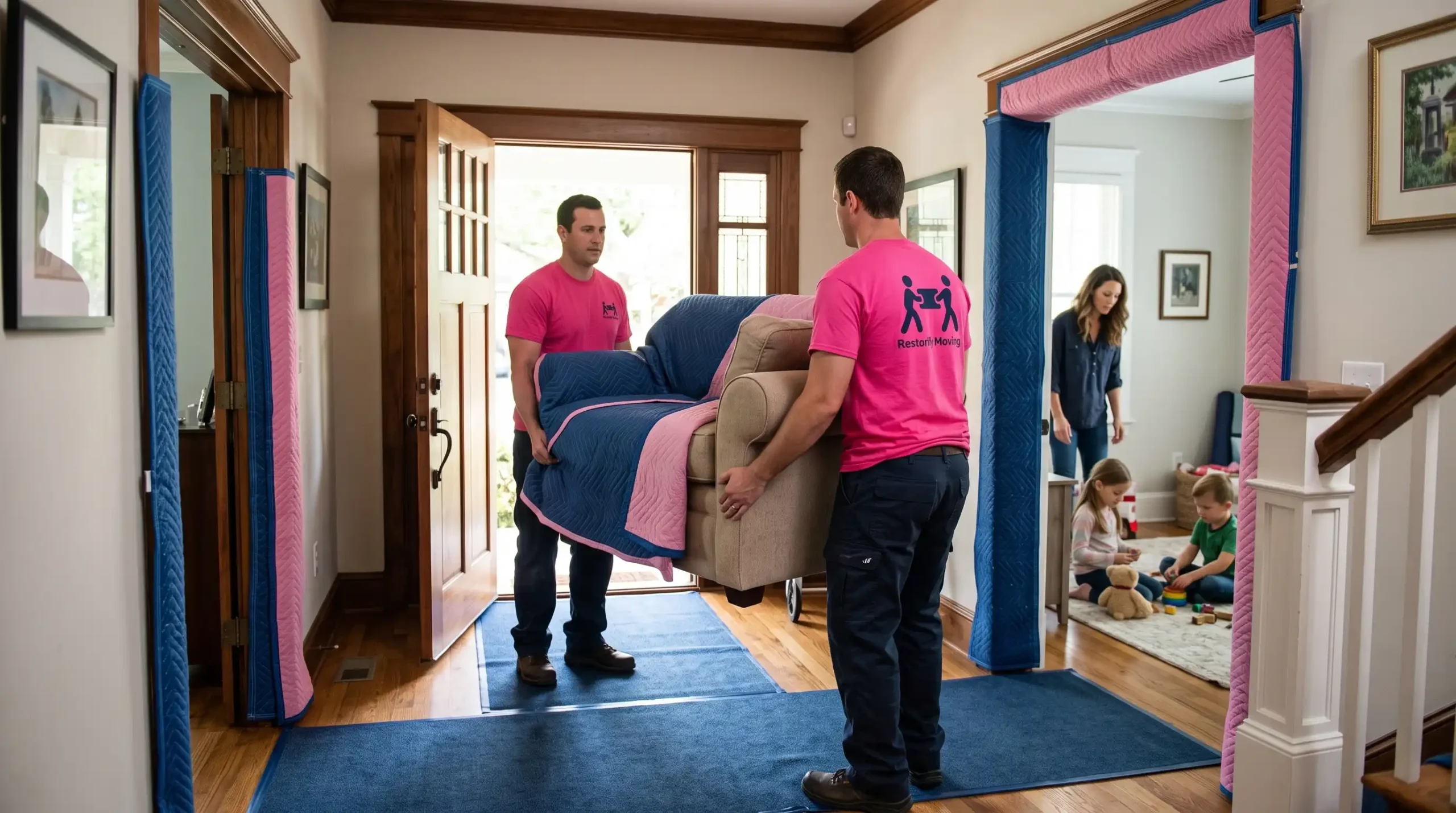
Creating a Dedicated Family Safety Zone
A busy home with open exterior doors and movers carrying heavy furniture is not a safe environment for small children or pets.
-
Arrange Childcare if Feasible: If possible, arrange for your children to spend the morning with friends, family members, or a babysitter.
-
Set Up a Quiet Room: If your children remain on site, designate one empty room with toys, games, and snacks where they can stay safely out of walking paths.
-
Secure Family Pets: Keep dogs and cats safely secured in their travel carriers, or board them at a local pet care facility for the day to prevent them from slipping out open exterior doors.
Conducting the Initial Walkthrough and Directing Placement
When the moving crew arrives, walk through your home with the crew lead:
-
Point out items requiring special care, such as delicate antiques, artwork, or fragile electronics.
-
Clearly indicate items that should stay behind or travel in your personal vehicle.
-
Exchange mobile phone numbers with the driver so you can stay in touch while driving between properties.
Once the truck arrives at your new home, station an adult near the front entry with a copy of your floor plan. Directing movers to place furniture and labeled boxes into their designated rooms right off the truck saves your family hours of heavy rearranging later on.
Settling In: The First 72 Hours and Virginia Resident Compliance
Once unloading is complete and the bill of lading is signed, focus on establishing immediate comfort and security rather than unpacking every single box.

Setting Up Beds and Kitchen Basics on Night One
Prioritize assembling bed frames, laying mattresses, and making beds before opening general household cartons. Moving is physically exhausting, and having clean, comfortable beds ready by early evening keeps morale high across the family.
Set up basic kitchen functions next so you can prepare breakfast, make coffee, and serve simple family meals without relying entirely on takeout. Leave decorative artwork, book collections, and storage areas for subsequent weekends.
Completing Virginia DMV and Arlington Commissioner of the Revenue Registrations
New Virginia residents must complete specific state and county administrative registrations within set legal deadlines:
-
Virginia Driver’s License: New residents must obtain a Virginia driver’s license within sixty days of moving to the Commonwealth. If you hold a valid, unexpired license from another state, you must pass a vision screening test at a Virginia DMV customer service center, though the written exam and road test are generally waived for drivers eighteen and older.
-
Vehicle Titling and Registration: Vehicles must be titled and registered with the Virginia DMV within thirty days of establishing residency. Northern Virginia localities, including Arlington County, require a vehicle emissions inspection before completing initial registration.
-
Arlington County Commissioner of the Revenue: You must register all vehicles garaged or parked in Arlington County with the Office of the Commissioner of the Revenue within sixty days of your move. The county assesses an annual vehicle personal property tax, which is billed annually and due on October 5.
-
Arlington Dog Licensing: Under Arlington County Code and Virginia law, dogs four months and older must be vaccinated against rabies and licensed with the county. Fees are $10 for a one-year license or $25 for a three-year license, and applications can be processed online or by mail through the county treasurer.
-
Voter Registration: Update your voter registration record through the Virginia Department of Elections portal to ensure your voting record reflects your new precinct before the next election cycle.
Practical Answers to Common Arlington Family Moving Questions
What should Arlington families do each week before moving day?
A successful family move follows a structured countdown. Begin eight weeks out by auditing household inventory, gathering written estimates, and verifying carrier credentials. At seven weeks, transfer pediatric medical records and request 90-day maintenance prescriptions. At six weeks, compile proof of residency documents and submit school registration files through Arlington Public Schools. At five weeks, downsize possessions using local donation centers and county hazardous disposal sites. At four weeks, decide between professional packing services and self-packing while sourcing double-walled cartons. At three weeks, reserve curb parking through the Permit Arlington portal and book condo freight elevators. At two weeks, pack seldom-used rooms while preserving children’s daily routines. At one week, coordinate utility activations and confirm crew details. During the final forty-eight hours, assemble family survival boxes, prep kitchen appliances, and clear entryways.
How far in advance should an Arlington family book a moving company?
Booking four to six weeks in advance works well during standard fall and winter months. For moves planned between May and September, or relocations scheduled over the final three days of any month, reserve your dates six to eight weeks ahead to secure your preferred morning arrival window.
Do I need a parking permit for a moving truck in Arlington residential neighborhoods?
If the moving van must park on an Arlington County street where spaces are metered, permit-zoned, or narrow enough to impede traffic, you should apply for a Temporary No Parking permit through the Permit Arlington portal. Single-family homes with long, level driveways that accommodate commercial vehicles without blocking public sidewalks typically do not require street permits.
How do I handle school district paperwork if our closing date is delayed?
Arlington Public Schools requires verified residency documentation to finalize enrollment. If your home closing or lease date is delayed, contact your school registrar or the APS Welcome Center. Families experiencing temporary housing transitions can provide written purchase contracts, signed lease agreements, or temporary residency affidavits to secure conditional enrollment windows.
What items must travel in our personal vehicle instead of the moving truck?
Always transport personal legal records, passports, housing deeds, birth certificates, prescribed medicines, family jewelry, computer backups, and your family’s first-night survival boxes in your personal car. These essentials should never be packed into general truck cargo.
Reliable Moving Support for Your Arlington Move
Careful preparation turns household moving from a chaotic chore into an orderly family transition. When you are ready to plan your upcoming move, working with experienced movers in Arlington, VA ensures that your heavy furniture, building access requirements, and neighborhood schedules receive dedicated professional care.
Whether your family needs complete packing support, specialized furniture handling, or dependable local moving services in Northern Virginia, our crews take care of the heavy lifting so you can focus on helping your children get settled into their new rooms.
Contact our team today to request a free moving quote and secure your family’s preferred moving date.