
Introduction
Moving a standard box across town is straightforward. Moving a 600-pound grand piano, a solid oak dining room table, a heavy marble-topped vanity, or an irreplaceable family heirloom through a narrow Northern Virginia stairwell is an entirely different challenge. Whether you are relocating from a historic townhouse in Alexandria, a multi-story colonial in McLean, or a modern high-rise condo in Arlington, large and delicate items present the highest risk of personal injury, wall scuffs, floor gouges, and permanent structural damage to the items themselves.
Executing a safe, damage-free relocation for bulky and high-value furniture requires specialized mechanical equipment, proper weight-distribution techniques, custom packing materials, and meticulous planning. In this guide, we break down expert strategies for moving heavy furniture and delicate antiques through tight spaces without a scratch.
1. Pre-Move Assessment: Measuring Clearances & Architectural
Limits
Before lifting a single piece of furniture, professional movers conduct a comprehensive spatial audit of both the origin and destination homes. Attempting to force an oversized armoire or sectional sofa through a narrow turn often leads to stuck furniture, damaged drywall, or ruined door frames.
Pre-Lift Safety Assessment:
✔ Measure item height, width, depth, and diagonal clearance
✔ Audit narrow hallway corners, low ceilings, and stairwell turns
✔ Protect hardwood floors, bannisters, and door jambs
✔ Verify weight capacity for stairs, ramps, and elevators
Step 1: Measure Critical Pathways
Measure the exact dimensions of doorways, hallway widths, stairwell turns, and ceiling heights along the entire exit route. Compare these measurements against your furniture’s smallest profile (often achieved by tilting or turning the piece diagonally).
Step 2: Identify Structural Obstacles
Watch for low-hanging light fixtures, narrow bannisters, tight 90-degree landing turns, and decorative door molding in older or historic Northern Virginia residences.
Step 3: Plan the Lifting Mechanics
Determine how many movers are needed and identify clear handhold points. Never lift heavy or antique furniture by decorative handles, legs, or ornamental trim, as these joints are not built to support structural load weight.
2. Safeguarding Home Interior Surfaces
Protecting your home’s interior is just as critical as protecting the furniture itself. Heavy items can easily gouge hardwood floors, chip tile, or tear carpet if dragged or dropped.
● Neoprene Floor Runners & Masonite Board: Lay heavy-duty neoprene runners or hardboard sheets across hardwood, marble, and carpet pathways to distribute weight evenly and protect against dolly wheel marks.
● Padded Door-Jamb Guards: Install heavy fabric guards over door frames to prevent wood splitting or paint chipping when maneuvering wide pieces through narrow entryways.
● Bannister & Railing Wrap: Cover wooden stair railings and bannisters with thick moving blankets and secure them with stretch film to safeguard against accidental impacts.
3. Essential Tools & Equipment for Heavy Furniture Moving
Attempting to move heavy or awkward items using raw physical strength alone leads to fatigue, improper form, and dangerous drops. Professional movers rely on specialized mechanical leverage equipment:
● Heavy-Duty Furniture Dollies & Hand Trucks: 4-wheel hardwood dollies fitted with non-marking rubber wheels handle flat-surface transport for heavy cabinets, credenzas, and safes.
● Furniture Lifting Straps & Harnesses: Shoulder-harness systems redistribute heavy loads from arms and lower backs to core muscle groups, allowing two movers to carry heavy items upstairs with balance and control.
● Stair-Climbing Equipment: Specialized stair dollies with tracks or multi-wheel configurations facilitate smooth movement up or down steep multi-story staircases.
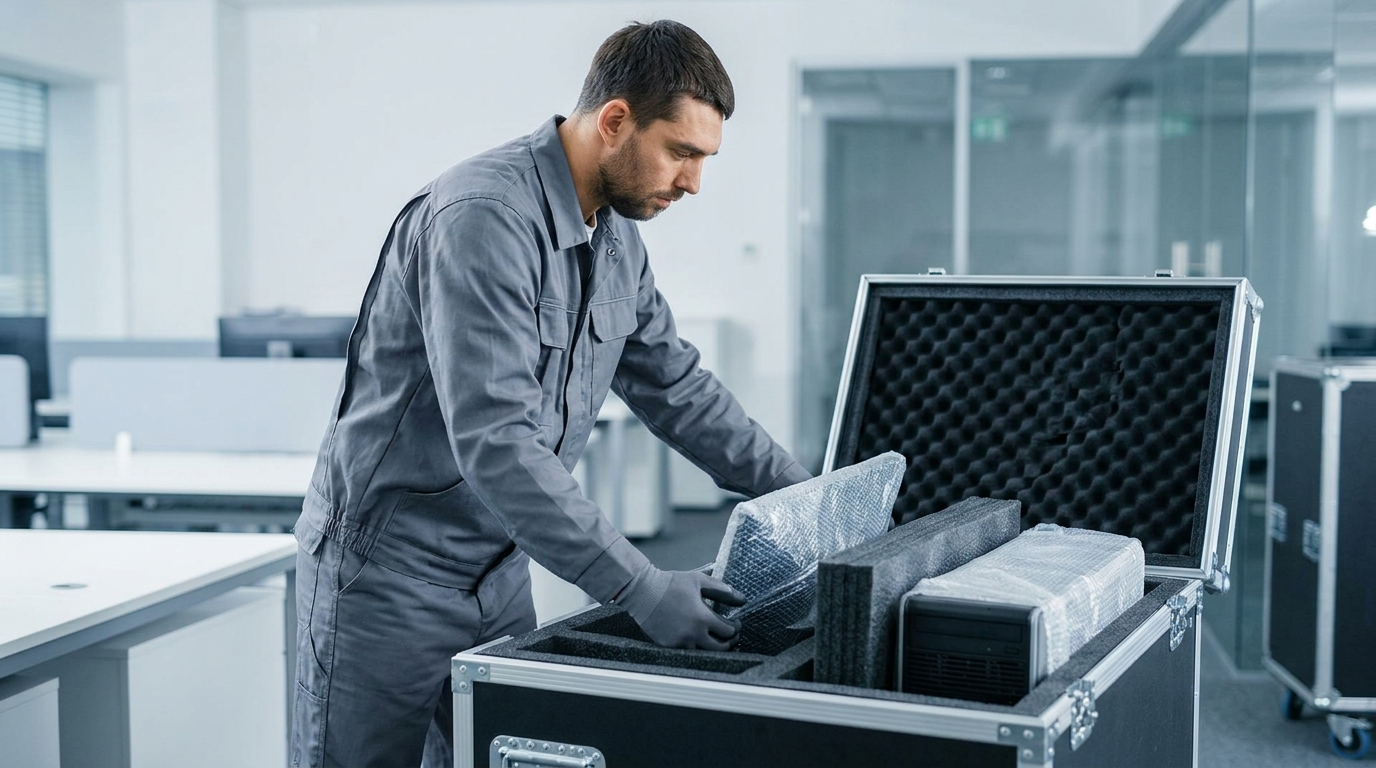
● Custom Wooden Crates: For high-value glass tops, marble slabs, large mirrors, and delicate antique art, custom-built wooden crates line items with high-density foam padding for maximum shock absorption.
Pro Tip: When hiring a full-service Moving Company in Arlington, such as Restorify Moving, our teams arrive equipped with specialized furniture moving equipment, padded wrap, and rigging straps to manage high-value specialty items effortlessly.
4. Specialized Care for Antique & Heirloom Furniture
Antique furniture requires specialized handling because aged wood, vintage finishes, and historic joint construction are sensitive to environmental stress and sudden impacts.
A. Avoid Direct Plastic Wrapping on Wood
Never apply stretch wrap directly to raw, polished, or vintage wood surfaces. Trapped ambient humidity can damage antique finishes or leave clouding on lacquered wood. Always wrap the item in clean, breathable cotton moving blankets first, then secure the blankets with stretch wrap on the outside.
B. Transporting Marble Slabs & Glass Tops
Marble tabletops and large glass panels must always be transported vertically on edge, never flat. Transporting stone or glass horizontally increases flex stress along natural grain lines, making the slab vulnerable to cracking over road bumps.
C. Handling Grand Pianos & Heavy Instruments
Grand pianos require specialized disassembly (removing legs, lyre, and music rack), securing the piano body to a padded piano board (skid board), and wrapping it thoroughly before maneuvering down stairs or ramps.
5. Managing Storage for High-Value Antiques
If your new home is undergoing floor refinishing, painting, or remodeling before you move in, delicate antiques and heavy furniture should not be left in an active construction area. By integrating your move with climate-controlled Moving and Storage in Arlington, your valuable antiques remain securely vaulted in a temperature- and humidity-regulated environment until your home is ready.
Conclusion: Protect Your Furniture & Your Home
Moving heavy furniture and delicate antiques shouldn’t result in damaged walls, ruined floors, or physical injury. By utilizing proper leverage tools, protecting home surfaces, and following professional packing protocols, you can ensure your most prized possessions arrive safely at your new residence.
At Restorify Moving, our trained specialists bring mechanical precision, specialized equipment, and white-glove care to every relocation in Northern Virginia.
Need Help Moving Heavy Furniture or Antiques?
Contact our local moving specialists today for a free estimate and receive 10% off your first move!
● Call Direct: +1 (571) 202-7222
● Local Headquarters: 3601 Fairfax Dr, Arlington, VA 22201
● Online Quote: Request a Free Quote Online