
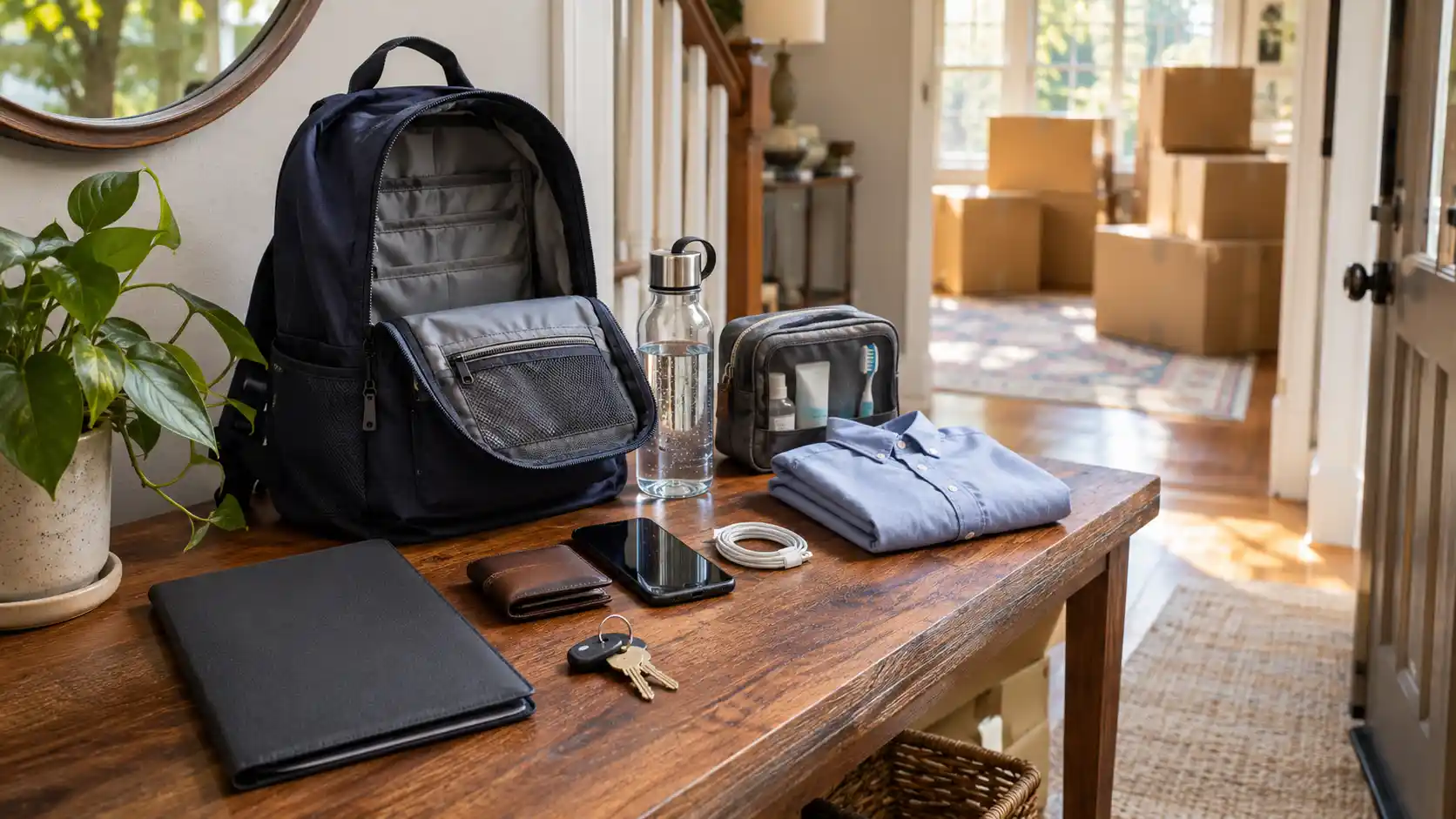
What to keep with you on moving day includes your identification, keys, medication, phone and charger, moving paperwork, small valuables, and supplies for your first night. Pack them in bags you control throughout the move. Add clothing, food, and family essentials for the time you may spend without your shipment.
Imagine arriving with a car full of boxes but no key to the new apartment. Or finding your sheets while the tools needed to assemble the bed are still on the truck. An essentials bag works best when you plan for the tasks ahead, including the small items each task requires.
Deciding what to keep with you on moving day starts with separating what you need during the journey from what you need after arrival. Adapt the checklist to your household.
Table of Contents
- Quick checklist
- Documents, keys, and payment details
- Medication and daily aids
- Phone, chargers, and work essentials
- Valuables and irreplaceable items
- A usable first-night kit
- Children, pets, and individual needs
- Delivery gaps and travel plans
- Keeping essentials out of the loading pile
- The final walkthrough
- Common questions
- Planning your move with Restorify
What to Keep With You on Moving Day: Quick Checklist
Use this table to decide what to keep with you on moving day. Cross out anything your household does not use, then add the supplies needed for your own routines.
| Group | Set aside | Where it belongs |
|---|---|---|
| Documents | ID, essential original records, moving agreement, lease or closing paperwork | Secure personal folder |
| Access and payments | Old and new keys, fobs, wallet, agreed payment method | Personal bag or secure pocket |
| Medication and daily aids | Needed medication, glasses, hearing aids, device accessories | Accessible personal bag |
| Communication and work | Phone, cables, wall adapter, laptop if needed | Personal bag |
| Small valuables | Jewelry, irreplaceable keepsakes, backup drives | Discreet protective pouch |
| Clothing and toiletries | Change of clothes, sleepwear, toothbrush, towel | Overnight bag |
| Children and pets | Familiar comfort item, feeding supplies, pet leash and bowls | Clearly assigned family bags |
| Food and drinks | Water, familiar snacks, simple meal supplies | Accessible food bag |
| First-night setup | Toilet paper, soap, bedding, needed shower curtain, basic tools | Separate arrival tote |
For everything going into the main shipment, use our packing tips for Arlington movers to plan the wider packing job.
1. Put Documents, Keys, and Payment Details Together
Start deciding what to keep with you on moving day by asking what you need to enter the new home, contact the mover, and handle the handover.
Make a Folder You Can Open Immediately
Set aside your moving agreement, estimate, inventory if provided, destination address, and contact details. Add your lease or closing paperwork and any building instructions you have received.
Keep essential originals, such as passports and birth certificates, in a secure inner section. They do not need to sit alongside the paperwork you will repeatedly take out. Avoid mixing these records into a general kitchen or bathroom box.
For interstate moves, the FMCSA moving checklist advises reading completed moving documents before signing and retaining the bill of lading through delivery, payment, and resolution of any claims.
Check Access and Payment Before Loading
Test the new keys or confirm the collection arrangement. Include building fobs and garage remotes if applicable. Keep old-home keys available until your agreed handover is complete.
Confirm the mover’s accepted payment method and when payment is due. Carry what your agreement requires. There is no universal cash amount every customer needs.
Save accessible copies of the address and key contacts in case your phone has no connection. Keep sensitive records protected.
2. Keep Medication and Daily Aids Accessible
Medication belongs high on your list of what to keep with you on moving day. Include the medicines and supplies you need during travel and before you can access your household shipment.
Follow the product labels. Ask your pharmacist or healthcare provider about transport, storage, and any additional supply needed for your travel plan. Sensitive medicines and medical equipment need individual instructions; a general moving checklist cannot provide those.
MedlinePlus recommends asking a pharmacist about specific storage instructions.
Also check for prescription glasses, hearing aids, mobility aids, and the accessories you normally use with them. Keep required chargers with their devices.
Accessibility changes what to keep with you on moving day. A bag is only useful if the person who needs it can reach it. Agree who carries shared supplies and where they will be placed at the destination, while keeping medicines away from children and pets.
3. Pack a Working Phone and a Complete Charging Kit
A phone without its wall adapter may leave you with a cable you cannot use. Pack the device, the correct cable, and a compatible way to charge it.
Charge your phone before the move. Save the mover’s number, the building contact, and the destination address somewhere easy to find. If you use a power bank, charge that too and follow the applicable transport instructions.
For people working soon after arrival, what to keep with you on moving day may also include a laptop, its charger, a headset, and any physical security key needed to sign in.
Test the setup before packing it. Can you open your work account without a device that is going into a box? Do you have a confirmed internet arrangement? A router alone will not establish service at the new address.
Keep the kit small enough to manage during the move. Spare monitors and cables you will not use immediately can follow your normal electronics packing plan.
4. Give Valuables and Irreplaceable Items Their Own Pouch
When choosing what to keep with you on moving day, consider how difficult an item would be to replace as well as its price. A family letter or a backup drive may matter more than an expensive kitchen appliance.
United Van Lines’ valuables checklist identifies small valuables, personal records, and computer backups as items to consider keeping close during a move.
Put jewelry and small keepsakes in suitable protective cases. A personal bag still needs padding and careful handling. Use a discreet container and keep it under your control during stops and unloading.
Large fragile possessions need a different plan. Do not overload a car with awkward items simply because they are valuable. Discuss packing and handling arrangements for them separately.
If you are comparing professional help, our guide to full-service packing explains the broader packing options to discuss with your mover.
5. Build a First-Night Kit You Can Actually Use
Think through your first evening: use the bathroom, eat, wash, sleep, and get dressed the next morning. Those tasks help you decide what to keep with you on moving day without packing half the house.
Pack for the Room You Will Arrive In
Useful supplies include toilet paper, hand soap, a towel, toiletries, sleepwear, clean clothes, and bedding. Check whether the shower needs a curtain and rings before adding them.
In a Reddit discussion about first-night boxes, participants mentioned overlooked items such as shower curtains, lighting, and tools needed for furniture. These are individual experiences, but they expose a useful question: what else must be available before an essential item works?
For example, an inflatable mattress needs its compatible pump. A bed frame may need its hardware and the correct tool. A packed meal may need a utensil or can opener.
Confirm who will handle bed assembly. When arranging furniture moving services, discuss the specific bed and any unusual assembly requirements.
Keep the Kit Within Reach
United’s first-night checklist recommends bringing essentials with you, especially when you arrive before the movers.
The first-night kit is part of what to keep with you on moving day if you need it before delivery. If it must travel on the truck, discuss its loading position and arrange an alternative for anything you cannot wait for.
6. Add the Essentials Your Family Needs
A generic list cannot decide everything about what to keep with you on moving day. Walk through each person’s usual meals, rest, and personal care needs.
Children
Set aside a familiar comfort item, a change of clothes, and appropriate feeding or diapering supplies. Older children can choose a book or activity for their own small bag.
Give the responsible adult access to that bag. A child’s supplies are less helpful when they travel in a different vehicle with someone arriving later.
Our guide to moving with kids covers the wider family transition. For tasks before moving day, use the moving checklist for Arlington families.
Pets
Keep the pet’s familiar food, bowls, leash or suitable carrier, cleanup supplies, and relevant records accessible. Ask your veterinarian about individual travel or medication needs.
The ASPCA’s moving guidance recommends keeping pets away from the loading activity in a quiet closed room or with a friend. Assign someone to manage their supplies and transport.
These responsibilities affect what to keep with you on moving day just as much as the packing list itself. Write down who has each bag before vehicles leave.
7. Pack for the Delivery Plan, Including Any Gap
The time between leaving your old home and accessing your belongings determines what to keep with you on moving day. Your personal arrival time and shipment arrival time may differ.
| Moving situation | Adjust your essentials |
|---|---|
| Local move with planned same-day delivery | Cover the journey, arrival, first evening, and next morning |
| Arrival before the shipment | Pack for the confirmed delivery window and discuss a realistic contingency |
| Temporary accommodation or storage | Keep everything you will need during the gap outside the stored shipment |
| Flying or traveling without a car | Prioritize bags you can manage and check current carrier requirements |
Even when booking local moving services, keep essentials independently accessible. A short driving distance does not tell you when a particular box will be unpacked.
For a long-distance move, ask about the delivery window before deciding how much clothing and other routine supplies to carry.
When arranging moving and storage, confirm how access works. Do not assume you can retrieve one bag whenever you want. Our storage packing guide addresses the belongings that will remain packed.
If you have no car, what to keep with you on moving day should fit the transport you actually have. Use manageable luggage, reserve space for it, and consider arranging bulky arrival supplies at the destination in advance.
8. Keep Your Personal Bag Out of the Loading Pile
Knowing what to keep with you on moving day is only half the job. You also need to keep those items out of the packing and loading workflow.
Before the crew arrives, place your personal bags in a clearly separate area and tell everyone helping that they travel with you. Use an obvious label such as “PERSONAL BAG: DO NOT LOAD.” Do not put the bags in a doorway or other carrying route.
Keep the essentials supervised and accessible. A parked car is not a suitable default storage place for every item; follow the instructions for medication, devices, and other sensitive belongings.
If you have booked packing services, separate personal items before packing starts, which may be earlier than moving day. Explain the boundary to the packers as well as the loading crew.
A Reddit discussion about first-night bags and documents highlighted the usefulness of separating important papers from household arrival supplies. That distinction also helps when someone needs toilet paper without needing access to your private records.
Assign one adult to each bag. After using a charger, key, or document, return it to the same place.
9. Check the Rooms You Used Last
Review what to keep with you on moving day once more after your final morning routine. The items you use last are often the ones still on a bathroom shelf, beside a socket, or on a kitchen counter.
Before leaving, check what to keep with you on moving day against these places:
- Bathroom shelves and counters for toiletries, glasses, and personal supplies.
- Sockets and bedside areas for chargers and devices.
- Cupboards and drawers for documents, keys, and small valuables.
- The kitchen for the food and utensils you set aside.
- The designated personal-bag area for anything waiting to be carried out.
- Outdoor and storage areas included in your move.
Use your checklist to confirm that each essential is with its assigned person. Then complete your agreed property handover.
Keep your personal bags accessible at the new home too. Set them somewhere outside the unloading route so they do not disappear beneath incoming boxes.
Our guide to common local moving mistakes covers related preparation issues, including labeling and access arrangements.
Questions About What to Keep With You on Moving Day
What if I Only Have Time to Pack One Bag?
If you have little time to decide what to keep with you on moving day, start with ID, keys, medication and required aids, phone and charger, payment items, essential paperwork, and small valuables.
Add the personal care and family supplies you cannot do without. Secure that bag before returning to general packing. If you need moving help urgently, ask about last-minute moving availability.
Is a Personal Bag the Same as a First-Night Box?
They have different jobs. Your personal bag carries items you need to control or access during the move. A first-night box holds household arrival supplies.
When deciding what to keep with you on moving day, bring both if you need both before the shipment arrives.
Should I Keep Cleaning Supplies With Me?
Keep a small arrival kit suited to the work you expect to do. Cloths, paper towels, and trash bags may be enough initially.
Check product labels and your mover’s current policy before choosing how to transport cleaning products. This checklist does not establish which products a carrier accepts.
Do I Need a New Suitcase or Organizer?
No. A bag you already own can work if it protects its contents, closes securely, and is manageable for the person carrying it.
Choosing what to keep with you on moving day matters more than buying a particular organizer.
Plan Your Move Around What Travels With You
Once you have decided what to keep with you on moving day, tell your mover which bags are excluded from the shipment. Confirm pickup and delivery arrangements, building access, and any packing or assembly work you need.
Restorify Moving offers moving and packing services in Northern Virginia and Washington, DC. Request a free moving quote with your moving date, addresses, and service needs so you can discuss the plan before moving day.